From recall to resilience.
Siemens Healthineers
.avif)
take notice//
When production halts
and audits begin,
getting back to market
is only part of the problem.
The work is finding what failed underneath.
(the scope)
- IEC 62366 usability system
- Human factors engineering templates
- Global operating procedures
- Labeling and packaging infrastructure
- Cross-functional governance
- Systems still in use across the portfolio
(the condition)
In 2008, a Class II FDA recall halted production and distribution across Siemens' diagnostics division.
The audits that followed exposed systemic disconnects between: product development, regulatory compliance, usability, and clinical use.
I entered through a narrow assignment: translate interface sketches into software-ready artifacts.
Within weeks it was clear the brief was pointing at a symptom.
The actual condition: a development process
with the right functions but not the right connections.
Each function was solving for its own mandate.
No shared priority connected the people who built these products to the people who installed them, used them, serviced them, or depended on their results.
Recalls don't announce themselves.
By the time a recall is declared,
the system has been usually failing quietly for years.
(the diagnosis)
The user interface problem was real.
Underneath it was a specification problem:
the same words meaning different things to different functions, with no shared standard to resolve the gap.
Underneath that was a documentation problem:
no centralized repository, no BOM integration,
no way to know which version was current
or who was working from what.
Underneath that was a usability problem:
testing that didn't reflect how these products performed
in the hands of the people who depended on them.
The organization had resources, expertise,
and genuine commitment to human health.
What it lacked was infrastructure
that could hold all of that together at scale.
The brief expanded.
So did the work.
(the work)
The problem lived in the spaces between capable functions:
product development, regulatory, documentation, labeling, launch, and sustainment.
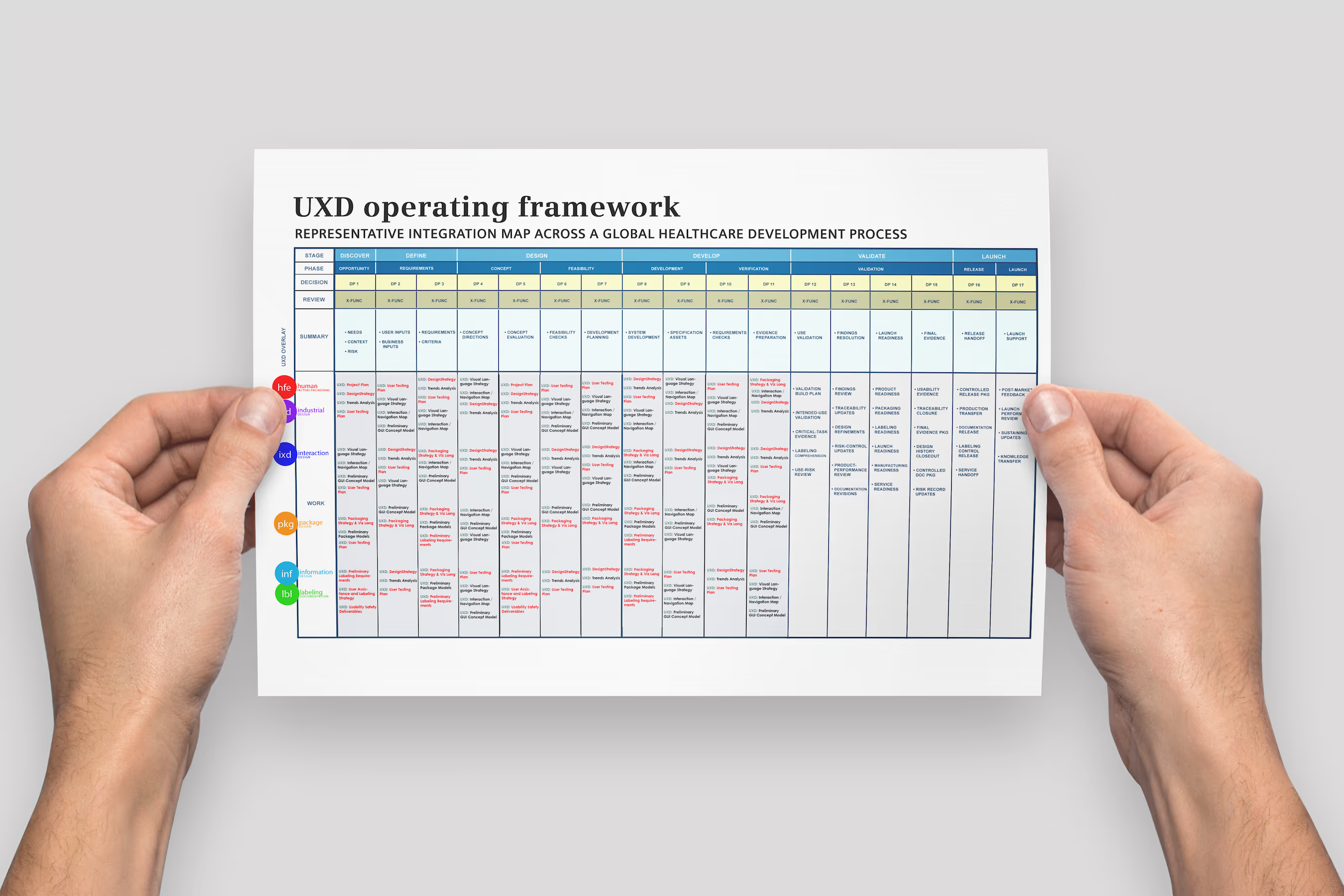
I built the operating infrastructure to connect them.
Usability and safety evidence system
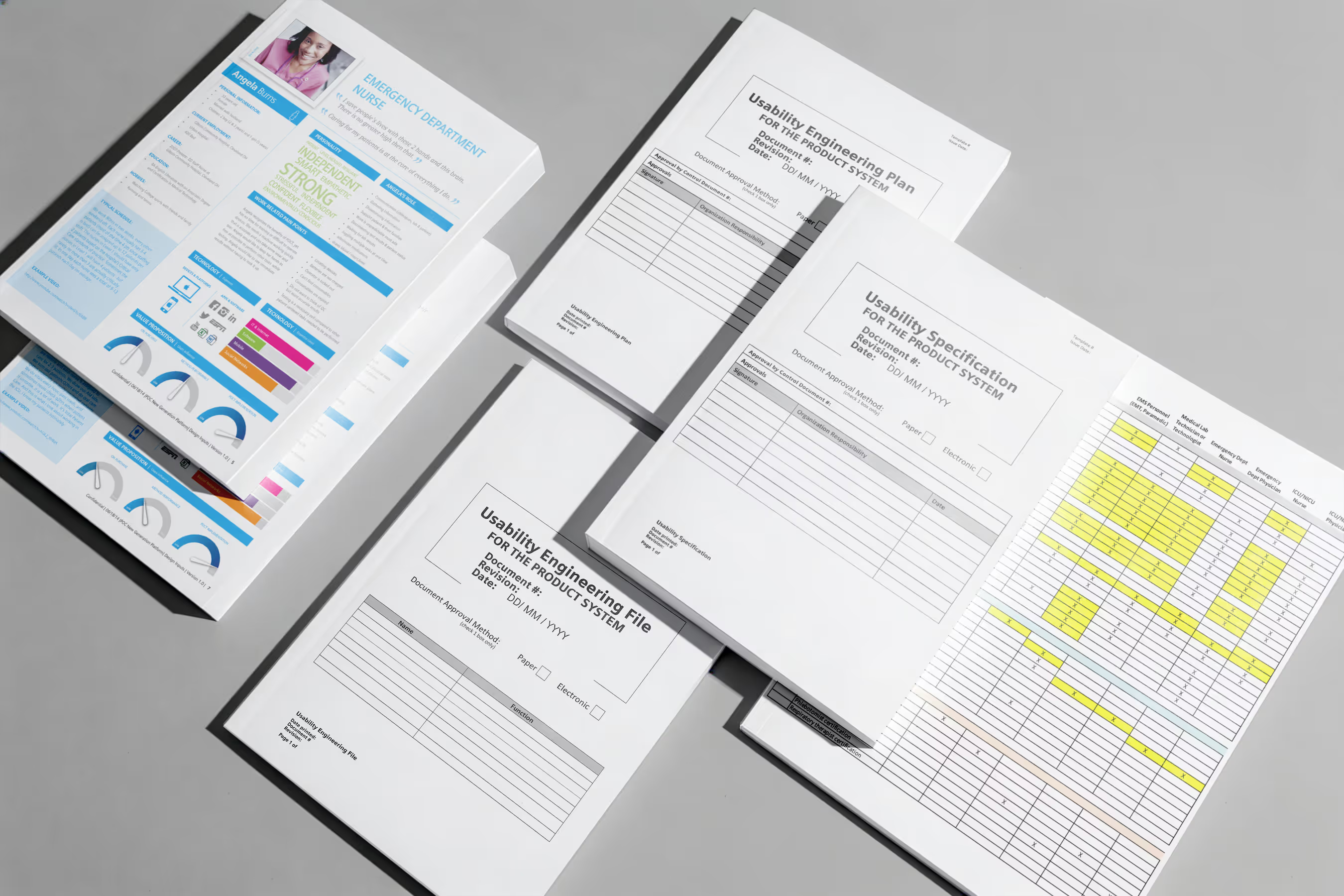
IEC 62366 frameworks, FDA human factors templates, and evidence structures made usability traceable, reviewable, and actionable inside product development.
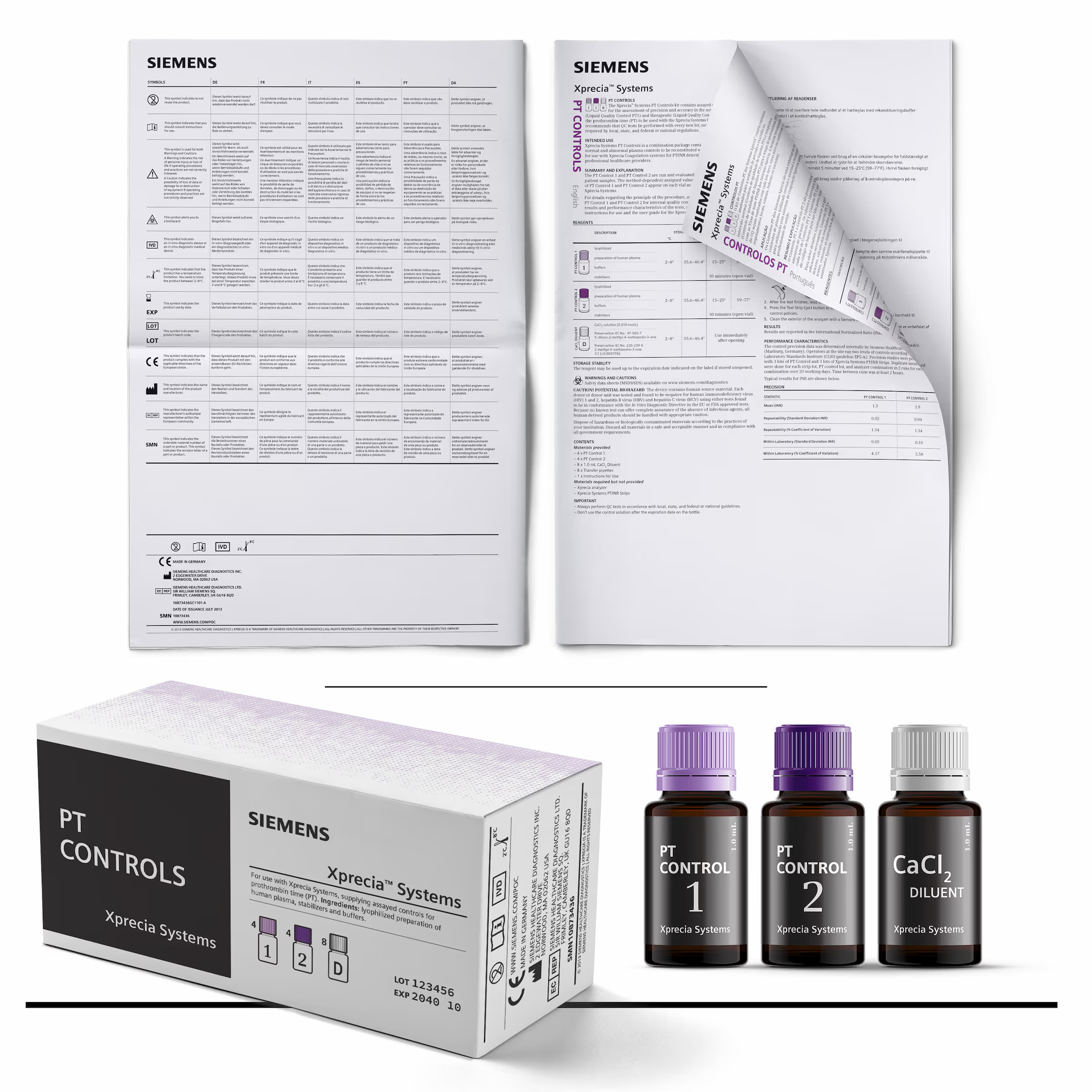
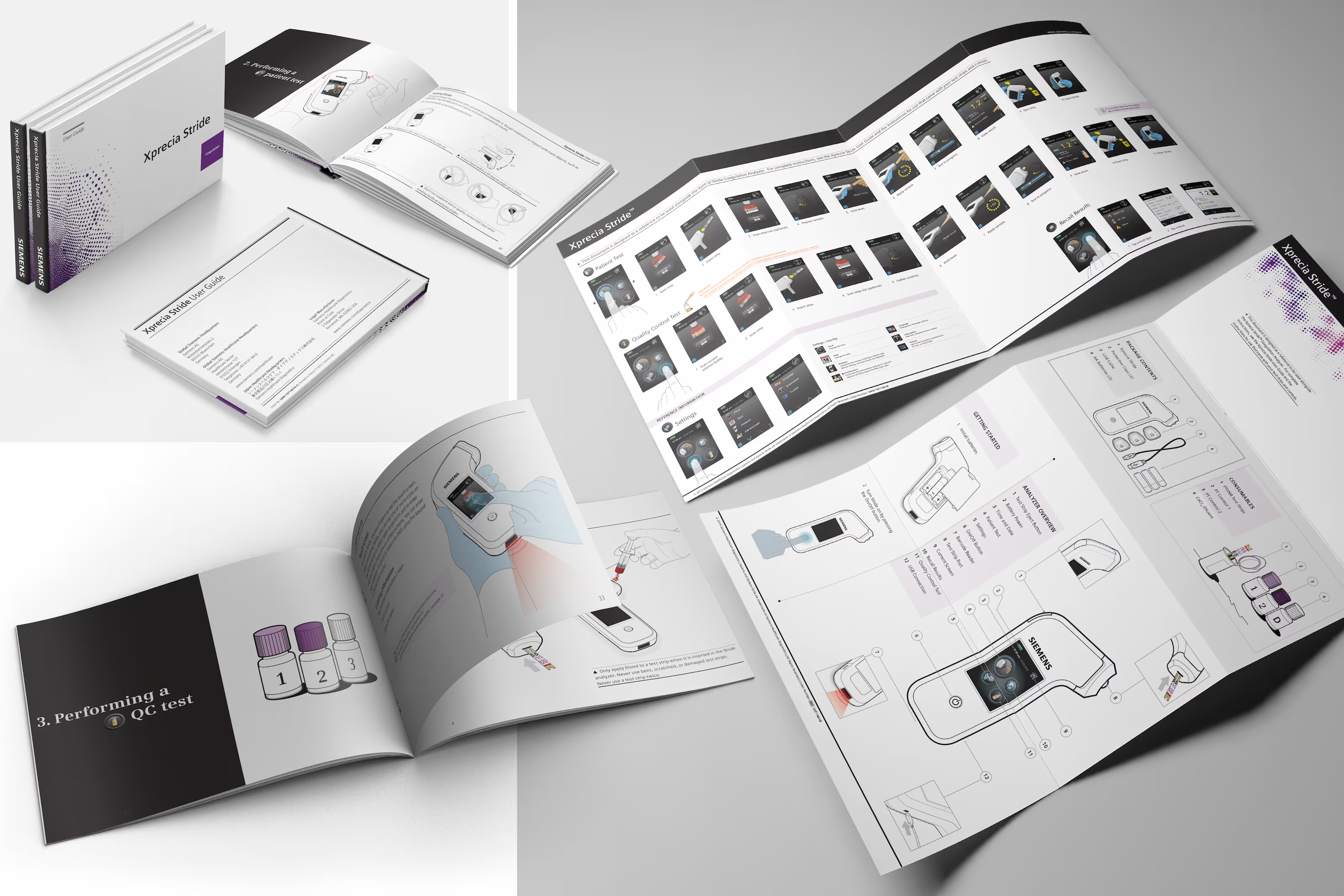
Instructional and documentation systems
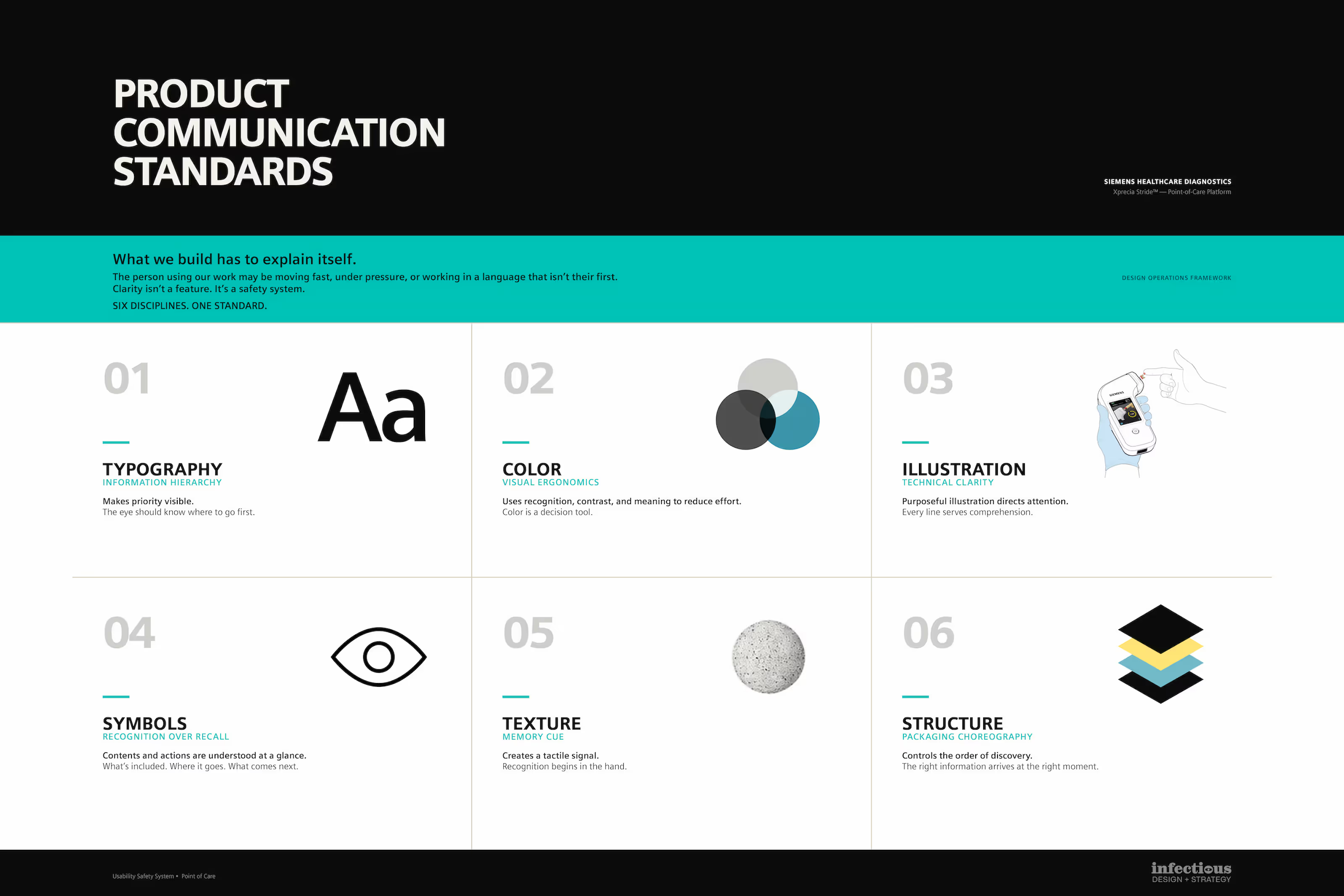
Standards for instructions, manuals, translation, localization, and documentation templates: built around how people read, comprehend, and act under clinical pressure, so attention stayed on the patient, not the device.
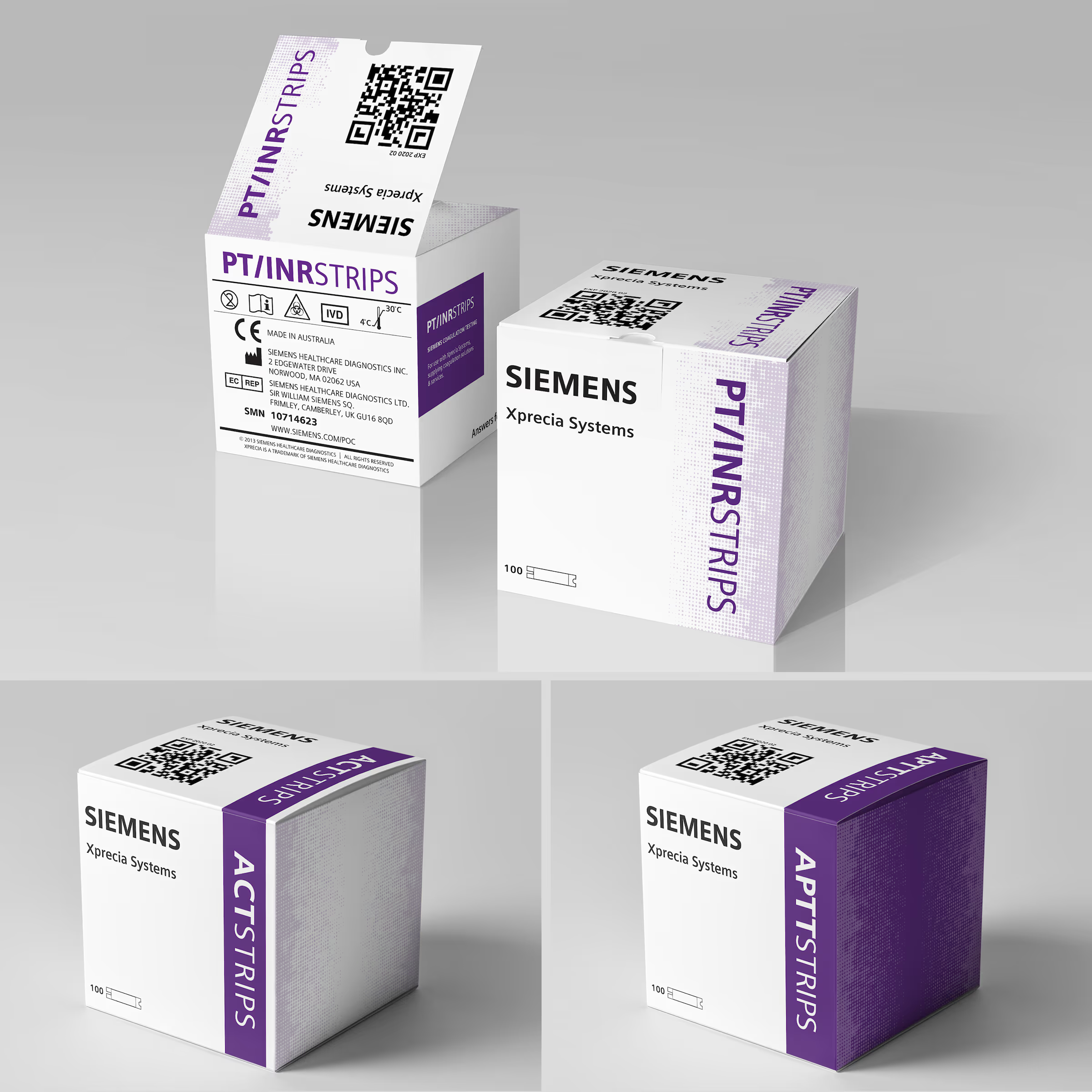
Artwork, labeling, and production infrastructure
Centralized, version-controlled systems for labeling, artwork, visual inspection, print production, and software-artwork integration, so design intent survived through approval, implementation, production release, and regulatory audit.
Cross-functional governance
Decision rights, operating procedures, workflows, and launch structures that connected user experience, product development, legal, regulatory, manufacturing, supply chain, and clinical operations across functions, programs, and geographies, so each team designed for the ones downstream, not only the release in front of them.
I embedded across those functions.
Not through authority.
Through traction.
Shared standards reduced rework,
clarified ownership,
and moved risk upstream.
The goal stayed fixed:
build upstream controls before failure became field behavior.
The framework was formalized as a division-level usability safety procedure.
Version-controlled.
Phase-gated.
Built into the product development,
from proposal through commercialization.
None of this was in my original scope.
All of it was necessary.
(the proof)
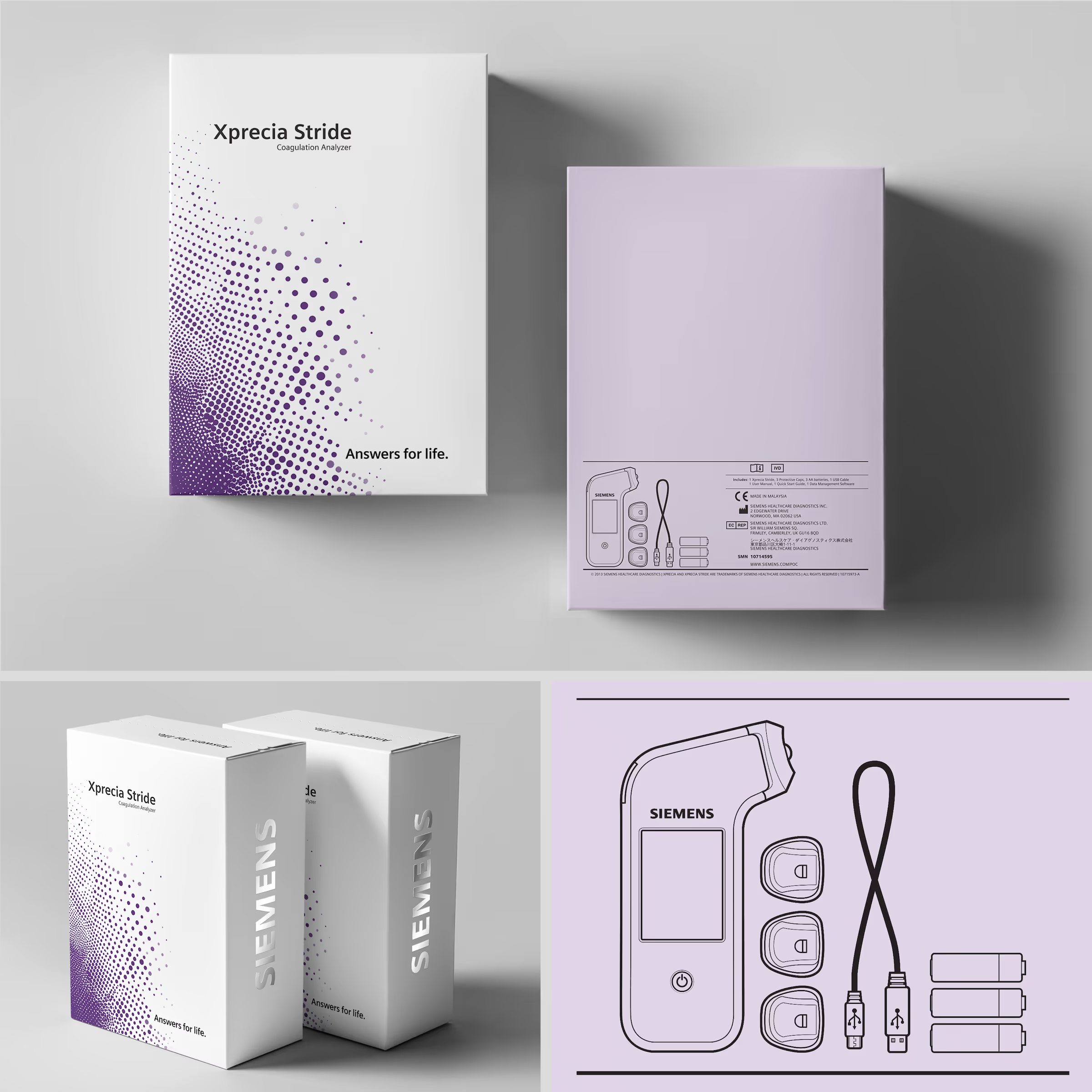
Xprecia Stride was the first proof point.
The system could carry intent from framework to launch.
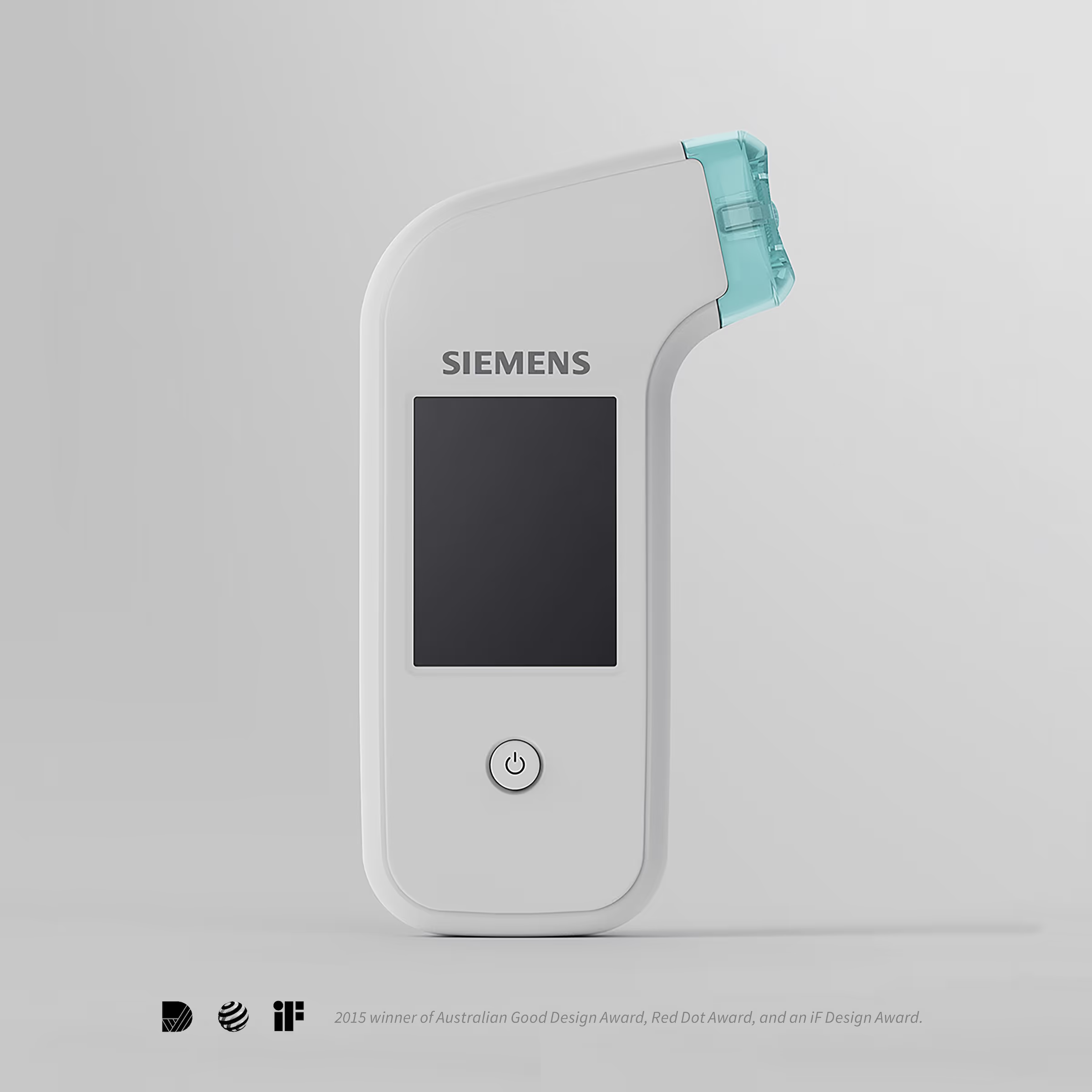
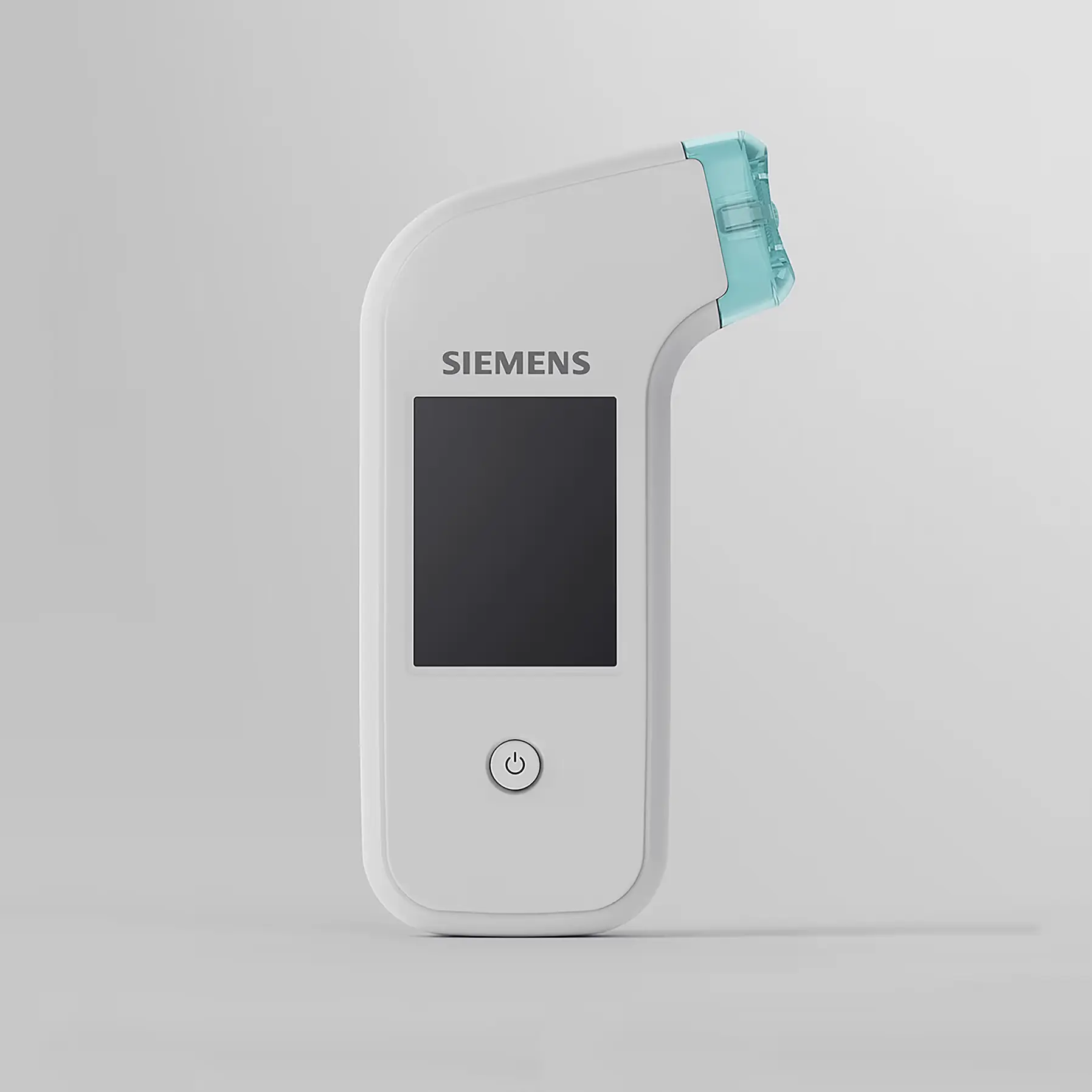
It marked Siemens’ entry into point-of-care coagulation testing: a handheld device, co-developed with Universal Biosensors, that delivered lab-quality PT/INR results at the bedside and in the clinic.
Built for the moment when a treatment decision can’t wait for a central lab.
Xprecia Stride received CE Mark certification in December 2014, launched across Europe in May 2015, and received FDA 510(k) clearance in September 2016.
It was the first point-of-care PT/INR device cleared under new FDA rules published that year.
The submission required a complete technical dossier: design documentation, safety and efficacy testing, clinical trial data, and human factors validation.
The dossier was built on the frameworks.
Safe for professional point-of-care use.
Clear under clinical pressure.
Rigorous enough for FDA review.


Far exceeds other medical devices.
All system elements integrate good design principles, usability, and state‑of‑the‑art enhancements to improve the testing experience for patients and professionals. The level of quality and design far exceeds other medical devices.
The product received Red Dot, iF Design, and Australian Good Design awards in 2015.
It reached 36 countries with more than 3,500 installed analyzers.
The awards mattered.
The installed base mattered more.
What the launch demonstrated was simpler: the system could carry intent from concept through regulatory clearance, commercial launch, and global scale— without losing the thread.
A next-generation program was already in parallel development, built on the same operating architecture.
The system wasn't proven by one launch.
It was proven by what the next launch didn't have to rebuild.
The frameworks didn't retire when the engagement ended.
They kept working: giving teams a way to launch without depending on individual memory or institutional heroics.
The usability, labeling, instructional design, and documentation infrastructure built during this engagement became the platform Siemens carried forward into the next generation of point-of-care diagnostics.
That lineage later appeared in Xprecia Prime — a CLIA-waived system whose FDA decision summary specifically called out simple operation, clear labeling, and quick-start guidance written for use in waived settings.
A decade later, people inside that work still find ways to tell me it mattered. That's something.
(the numbers)
Frameworks still in use
Shaping launches long after handoff.
Regulatory precedent
First under new FDA rules, 2016
Installed analyzers
Serving hospitals & clinical settings worldwide.
Countries reached
Global install base at market maturity.
Design awards
Red Dot, iF Design, Australian Good Design Gold, 2015.
European market entry
CE Mark received in December 2014.
(the evidence)