From spreadsheet to scale.
Aviva Psychology Services

scaling realities//
When founders are the infrastructure,
demand becomes strain.
(the condition)
Two founding psychologists.
A shared ambition and separate instincts
about how to express it.
They wanted to build a group psychotherapy practice,
hire doctoral-level clinicians,
and expand across two Massachusetts locations.
The public face they had assembled followed
familiar behavioral-health patterns:
a crowd-sourced identity, template copy optimized
for convention rather than distinction,
soft reassurance, and a digital path that let people find them.
It looked credible enough to enter the market.
It also looked like the market.
The constraint: Aviva needed to become recognizable
without disappearing into the category it was entering.
The intentions were real.
The infrastructure wasn't.
(the diagnosis)
Aviva did not begin as a scaling problem.
It began as a translation problem.
The original brief named a logo, a business card, and a website.
The situation required more: business architecture
that could make Aviva findable, trustworthy, and operationally coherent — operating infrastructure that could move with them as the practice grew.
That gap became the work.
The website had to become more than a brochure.
It had to become the front door to the practice:
clear enough for prospective clients to understand fit, credible enough for referral sources,
useful enough for clinicians,
and structured enough that every next step
did not run back through the founders.
(the work)
The website was the front door.
The system behind it was the business.
The practice had a name, a deadline,
and two founders with different instincts
about how the business should sound, feel, and work.
The first task: translation.
Vision, mission, and values architecture
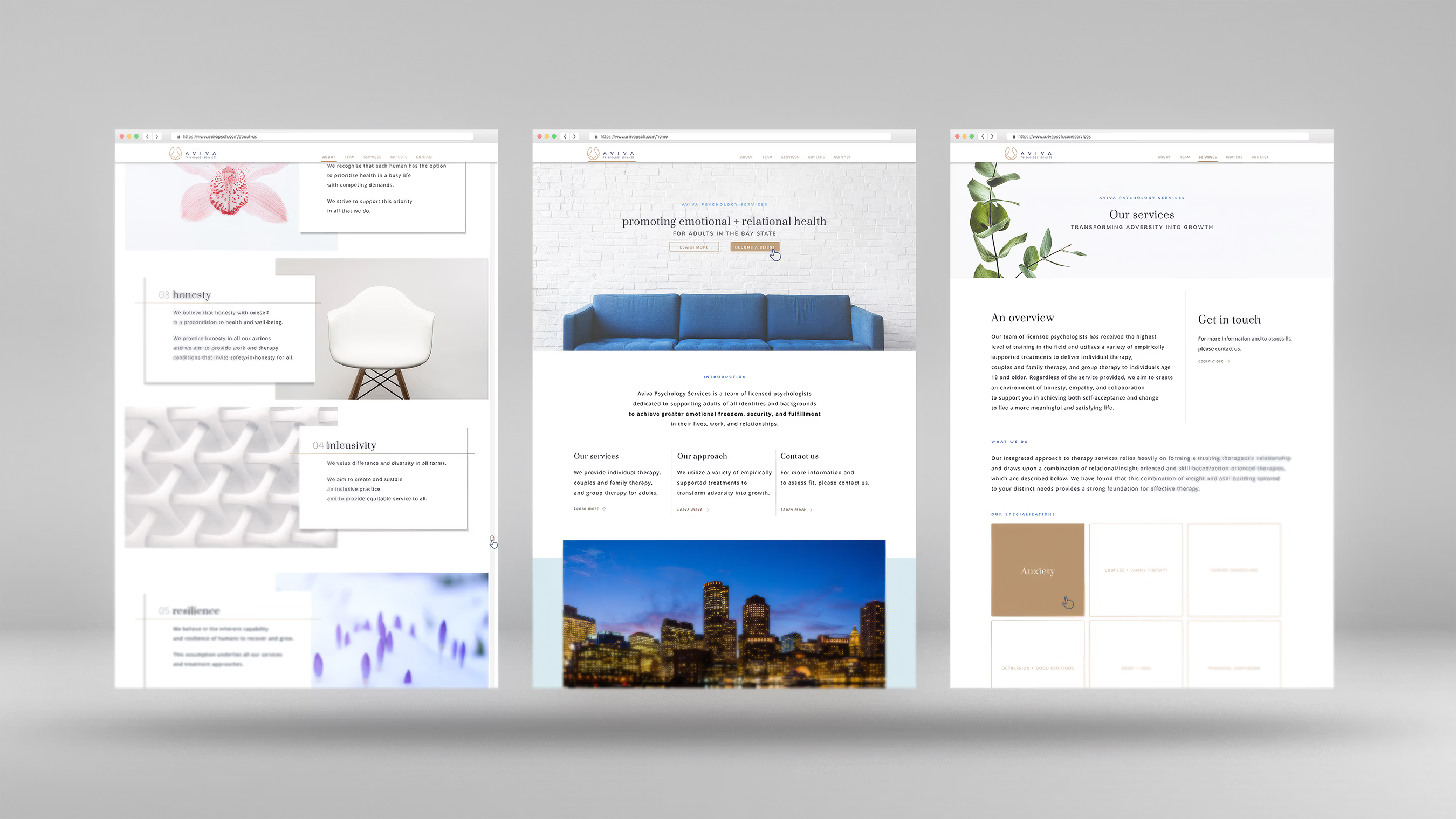
Seven core values — freedom, health, honesty, inclusivity, resilience, tolerance, value-based living. Each became a navigable content section with its own language, conceptual rationale, and curated imagery. Together, they became an operational framework the practice could hire against and refer to without the founders having to explain themselves in every conversation.
Language and content architecture
I developed the language and content structure
from the founders’ clinical expertise, beliefs, and ambitions, then shaped them against how they thought, how they worked,
and what they wanted Aviva to become. Each page was developed in context: what a visitor needed to understand, what needed more room, what could wait, and where the next step should lead. That discipline carried through values, services, team profiles, careers, and intake. The voice became Aviva’s. The structure made it repeatable.
Brand identity and visual system
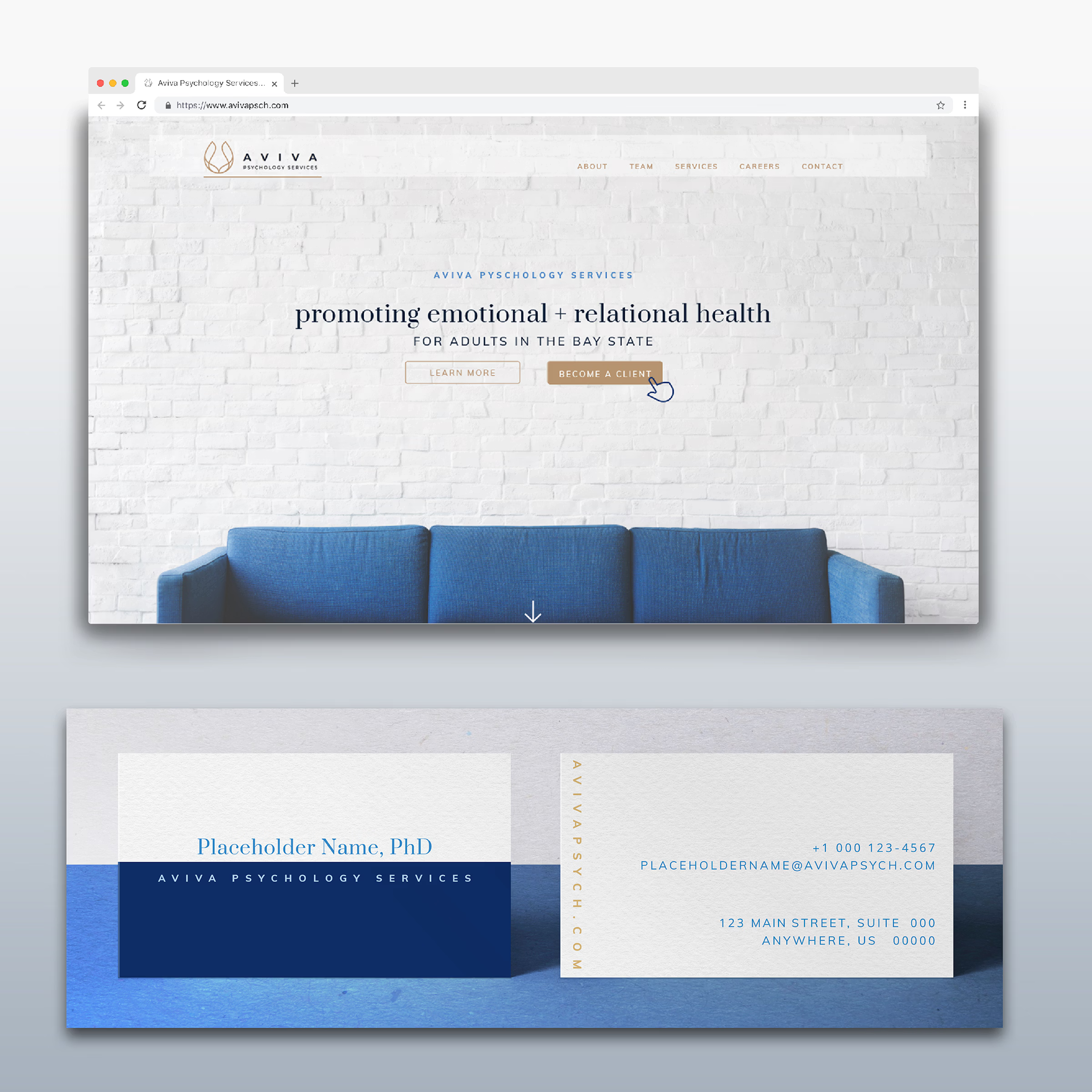
An adapted mark, refined into a full identity system — typography, color, signage, print, and onboarding materials. Clinical without being cold. Welcoming without being soft. The practice should feel considered before a client ever walked through the door.
Content management system (CMS)
I built the site on a CMS structure for founder-managed maintenance. Team profiles, locations, services, careers, and contact content could be updated as the practice changed — without calling a developer. Hiring infrastructure was built into the system from launch: job postings, resume collection, and applicant management could be managed in-house.
Website and digital infrastructure
Secure appointment pathways, practice-management access, Google Maps, Google Analytics, and SEO were integrated from launch — connecting the public website to the systems the practice used to operate.
Interaction design
The motion language was a deliberate therapeutic decision: The site should feel the way the practice feels. Gradual. Safe. Unhurried. Elements rose gently and resolved toward center. A client should feel the pace of the practice before reading a word.
Imagery and art direction
Every image selected with explicit conceptual logic.
The rationale was documented so the founders could extend the imagery system without losing the thread.
Operational infrastructure
The careers section was built to attract doctoral-level, values-aligned clinicians, with language specific enough to self-select. Hiring, applicant management, and clinician growth could be managed inside the practice as the team expanded.
Founder handoff
Guidance, editable systems, and content structures designed for independence. The founders could extend the system without rebuilding it — and without calling me.
I translated a shared clinical ambition into a business system that clients, clinicians, referral sources, and founders could all use — and run.
(the proof)
The site launched in 90 days —
the deadline named in the discovery document.
On January 1, 2019, Aviva's public-facing business system was live.
Within the first six months, website-generated inquiries had roughly tripled— based on intake and analytics data monitored during the handoff window.
By year four:
Revenue grew from approximately $400K to an estimated $4.5M.
Two founders to a growing clinical team.
One location to two, including a downtown Boston flagship office. Vendor reliance reduced by an estimated 80%.
Revenue estimate based on team size and conservative Boston-area market rates across licensed and supervised clinical staff.
No outside capital.
No custom rebuild.
No standing vendor dependency.
The system ran without outside support for seven years. The founders updated their team, added clinicians, managed hiring, and edited content without calling a developer.
The infrastructure did what it was built to do.
When they were ready to grow beyond it, they moved to a new platform with a new agency in 2026 — on their own terms, on their own timeline.
The practice that launched with two psychologists and one location now operates across two.
It employs thirty-plus licensed clinicians and clinical trainees and have expanded into specialty clinics, coaching programs, and postdoctoral fellowships.
The foundation held long enough to become something they needed to outgrow.
I built the system the brief could not name.
Independence, structured to scale.
(the numbers)
Discovery to launch
From discovery to live operating system.
Website inquiries
Roughly tripled within six months.
Revenue scale
From $400K in four years. No outside capital.
Vendor reliance cut
Founders ran more in-house.
(the evidence)