From product to platform.
Thermo Fisher Scientific
control yourself//
The ask was economy.
The work created leverage.
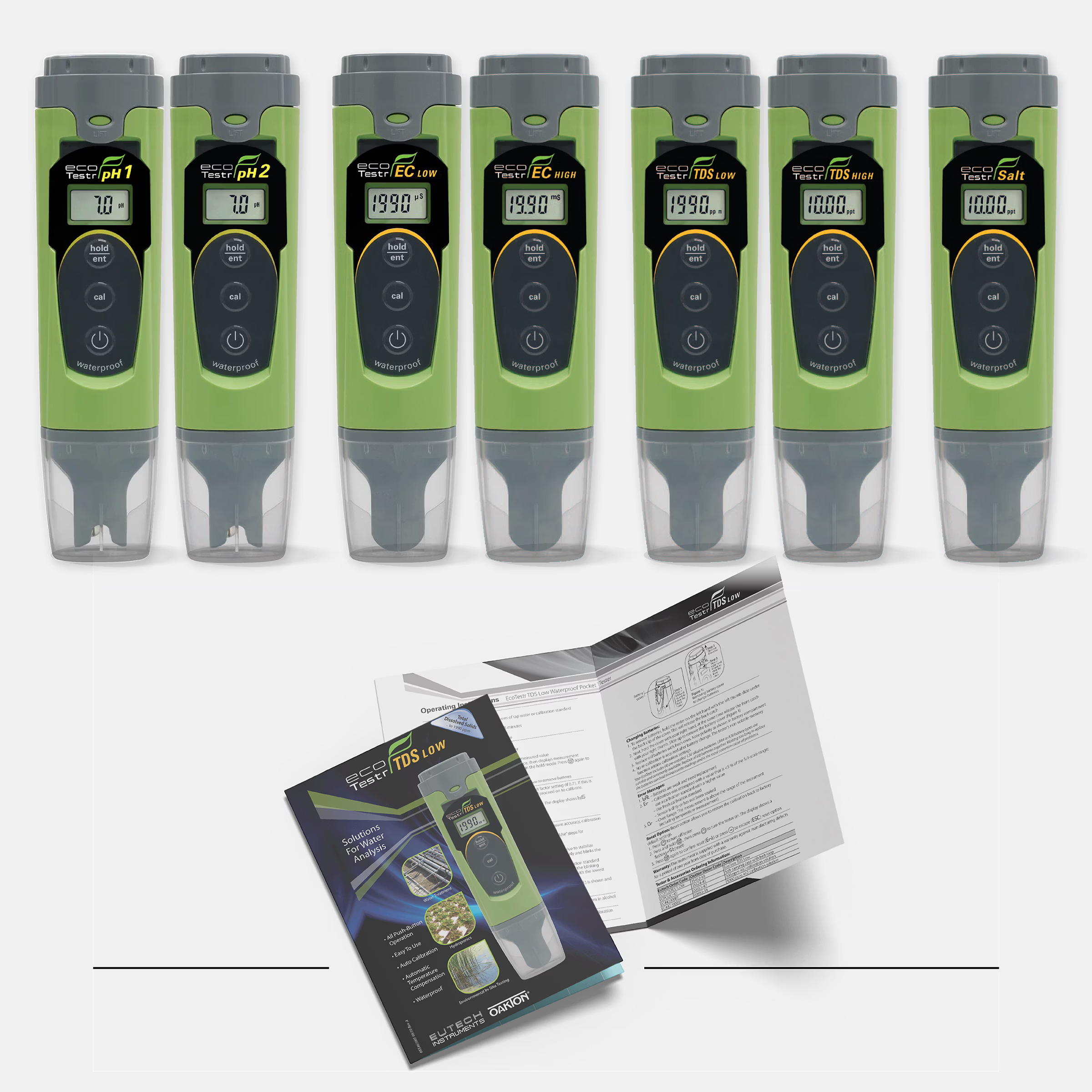
One housing.
Seven products.
Three brands.
(the condition)
Eutech Instruments manufactured reliable, low-cost field testers for water analysis — pH, conductivity, TDS, salinity — across industries from wastewater treatment to pharmaceutical research to food production.
The testers worked. The line needed to scale more affordably.
The brief: design a pocket tester to complement the existing pen-style stick testers. Use the existing component architecture: PC board, three buttons, segmented display, probe, battery housing. Build it for less than the economy tester already in production.
The new design had to differentiate seven variants, stand on a retail shelf, and hang from a peg display.
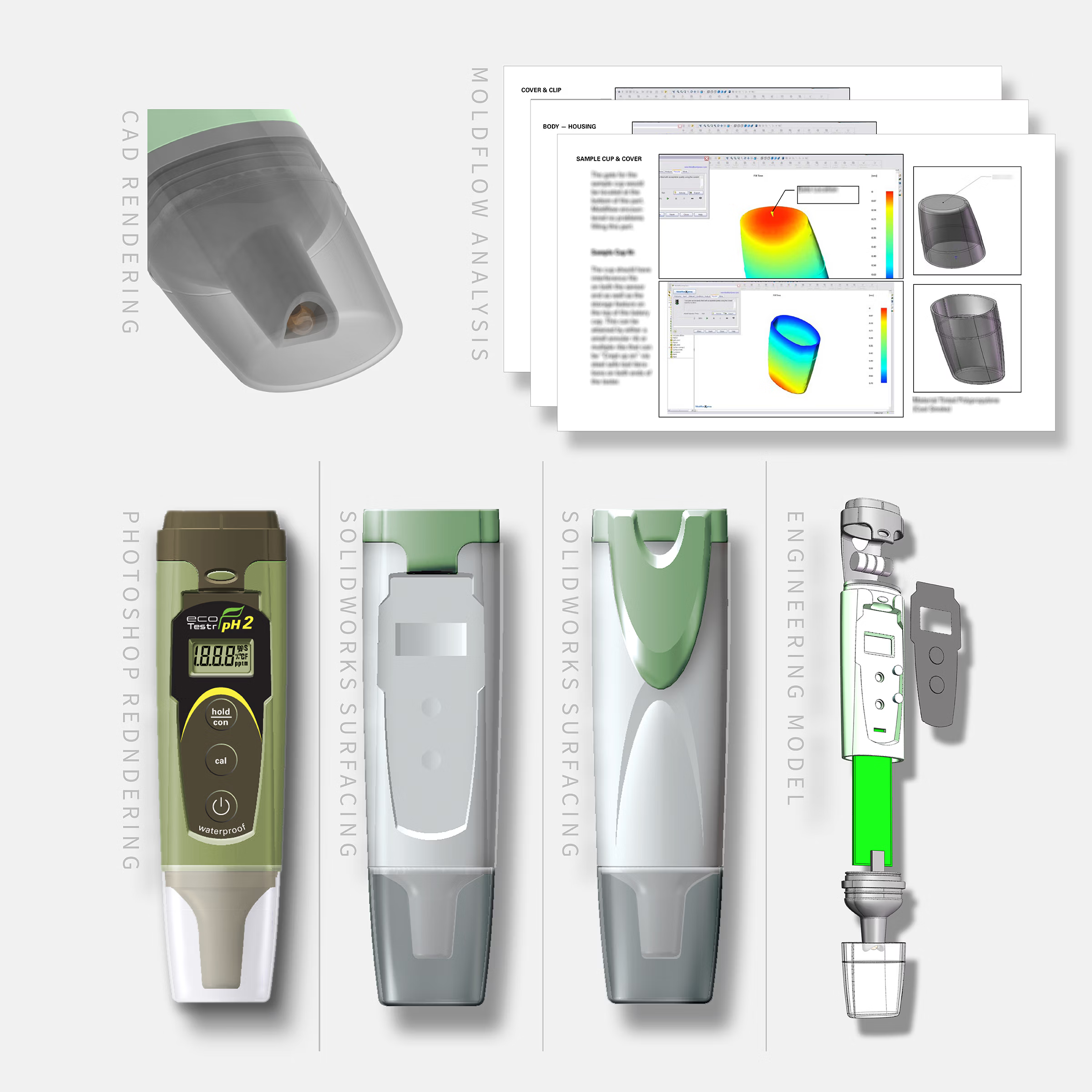
I was consulting in-house at Thermo Fisher Scientific, working directly with Eutech's development team alongside Paul Sydlowski and Craig Henshaw, whose mechanical engineering fluency made the concept buildable.
(the diagnosis)
The cost target ruled out structural variation.
Seven products could not mean seven housings.
The variation had to live somewhere else:
in the membrane graphics,
the PC board configuration,
the color of the plastic.
The form had to stayed constant.
Everything that distinguished one tester from another was applied to it.
And so, the constraint became the architecture.
Then, a second insight, not specified in the brief: a bad reading can be checked, a dead battery can be replaced. A tester dropped to the bottom of a wastewater tank is gone. It's a lost tester.
Designing for retrieval is designing against the one failure a user cannot undo.
(the work)
Single housing.
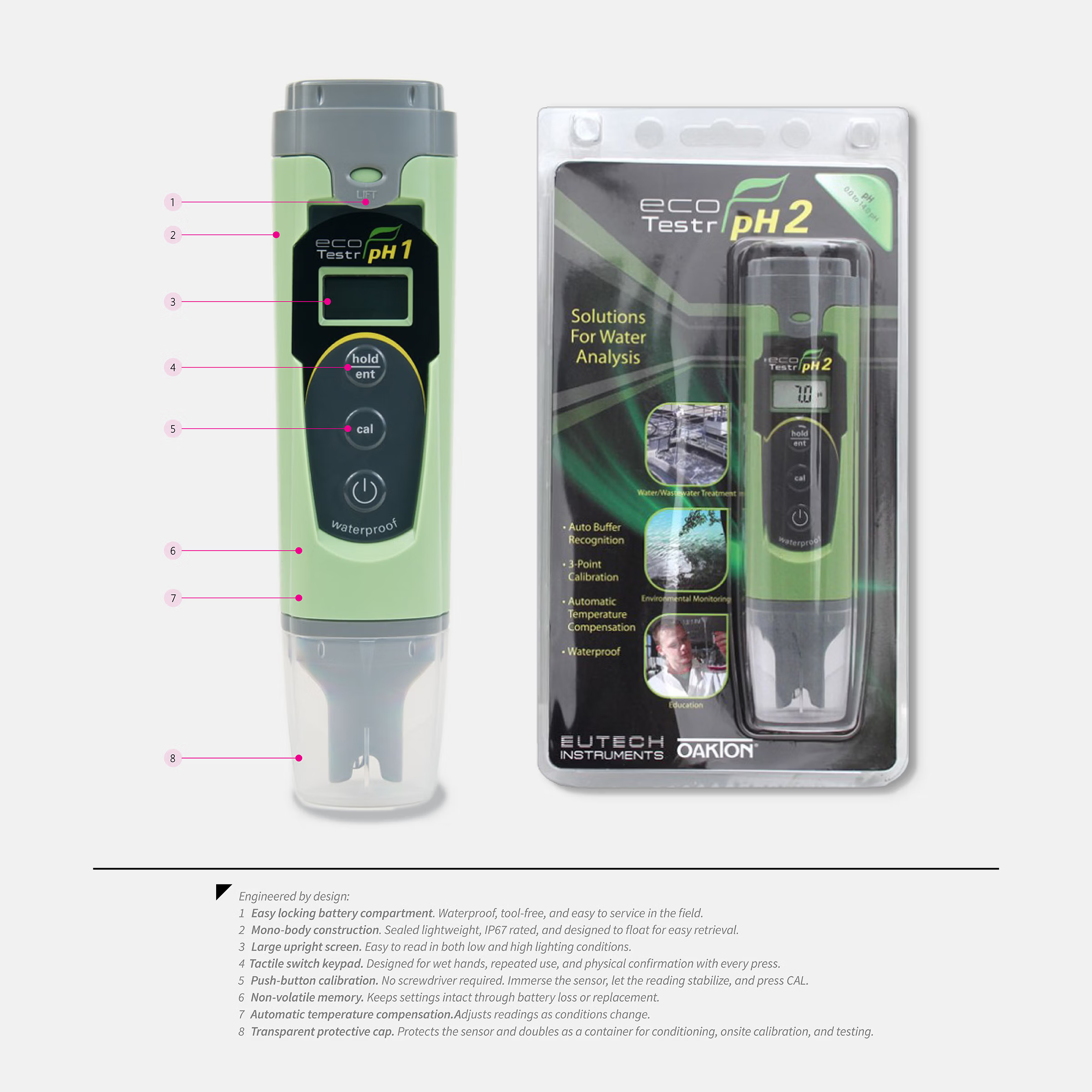
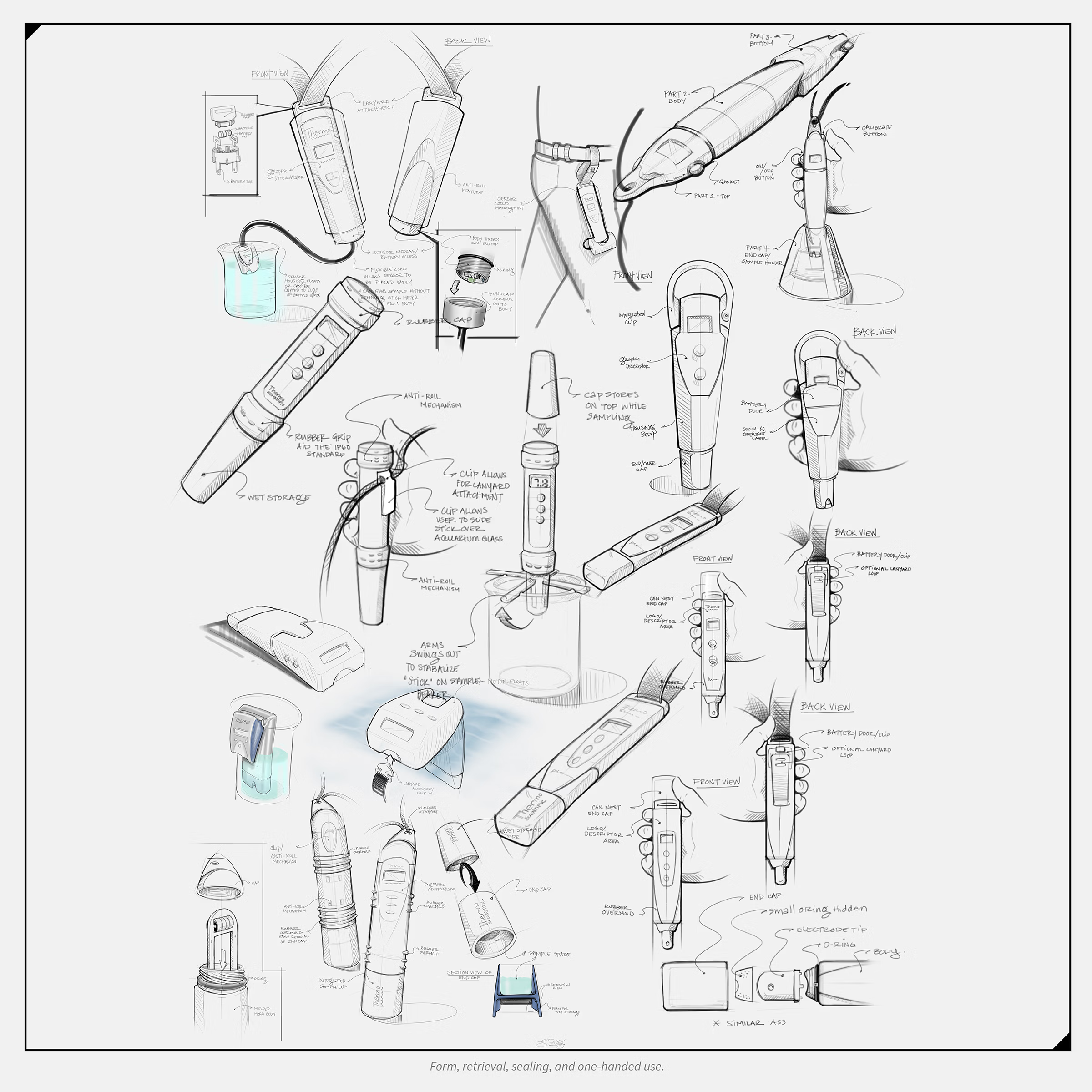
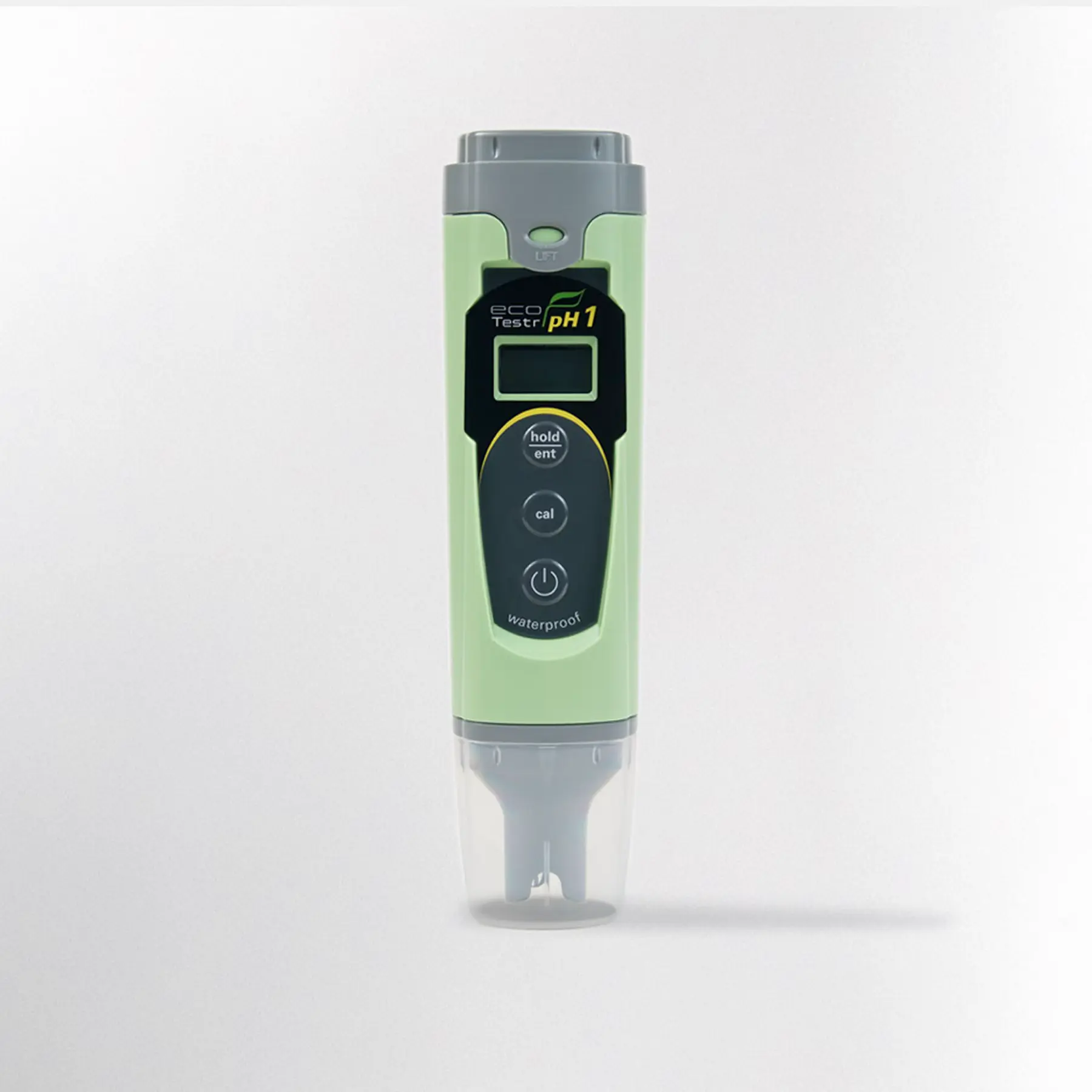
One injection-molded, ergonomic form carried seven products. Variation lived in membrane graphics and PC board configuration, not a separate primary housing tooling.
Sealed body.
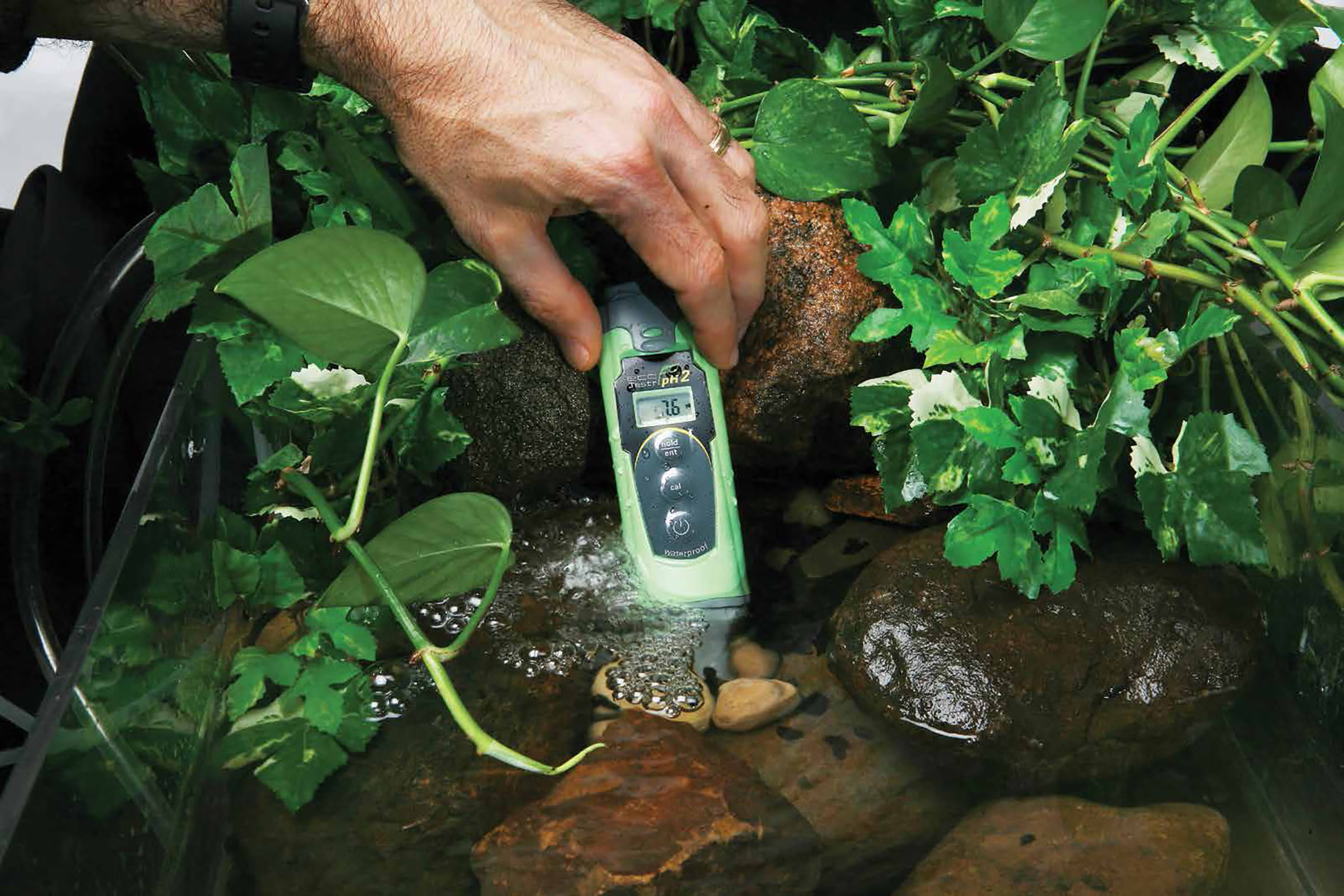
A mono-body housing reduced sealing complexity and met IP67 requirements. Trapped-air construction let the tester float, making retrieval part of the architecture.
Fieldworthy.
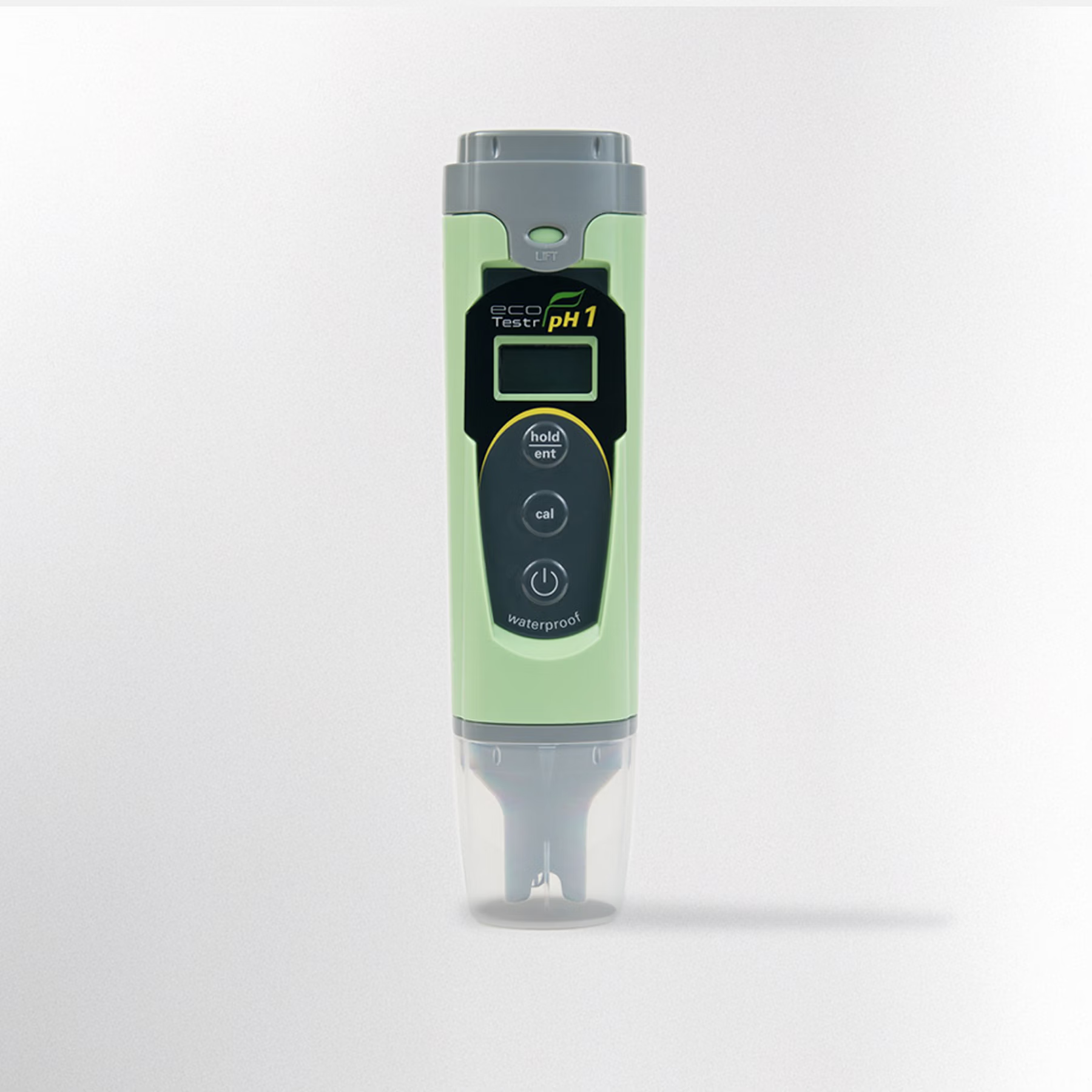
A membrane keypad over mechanical switches provides confirmation with each press in wet conditions. An upright segmented display remains readable in low and high lighting conditions. The protective cap doubles as a calibration container, reducing what has to be carried into the field.
Serviceable without tools.
Tool-free battery access and non-volatile memory preserved settings through replacement, avoiding unnecessary recalibration.
Retail-ready.
One clamshell package, with an insert, works standing on a shelf or hanging from a peg — serving both scientific supply and point-of-purchase retail without redesign.
Private-label ready.
The same housing carried the EcoTestr line for Eutech, a version for Cole-Parmer, and the Pocket Tester for Thermo Fisher. Differentiation came through membrane graphics and plastic color, not form.
Product identity.
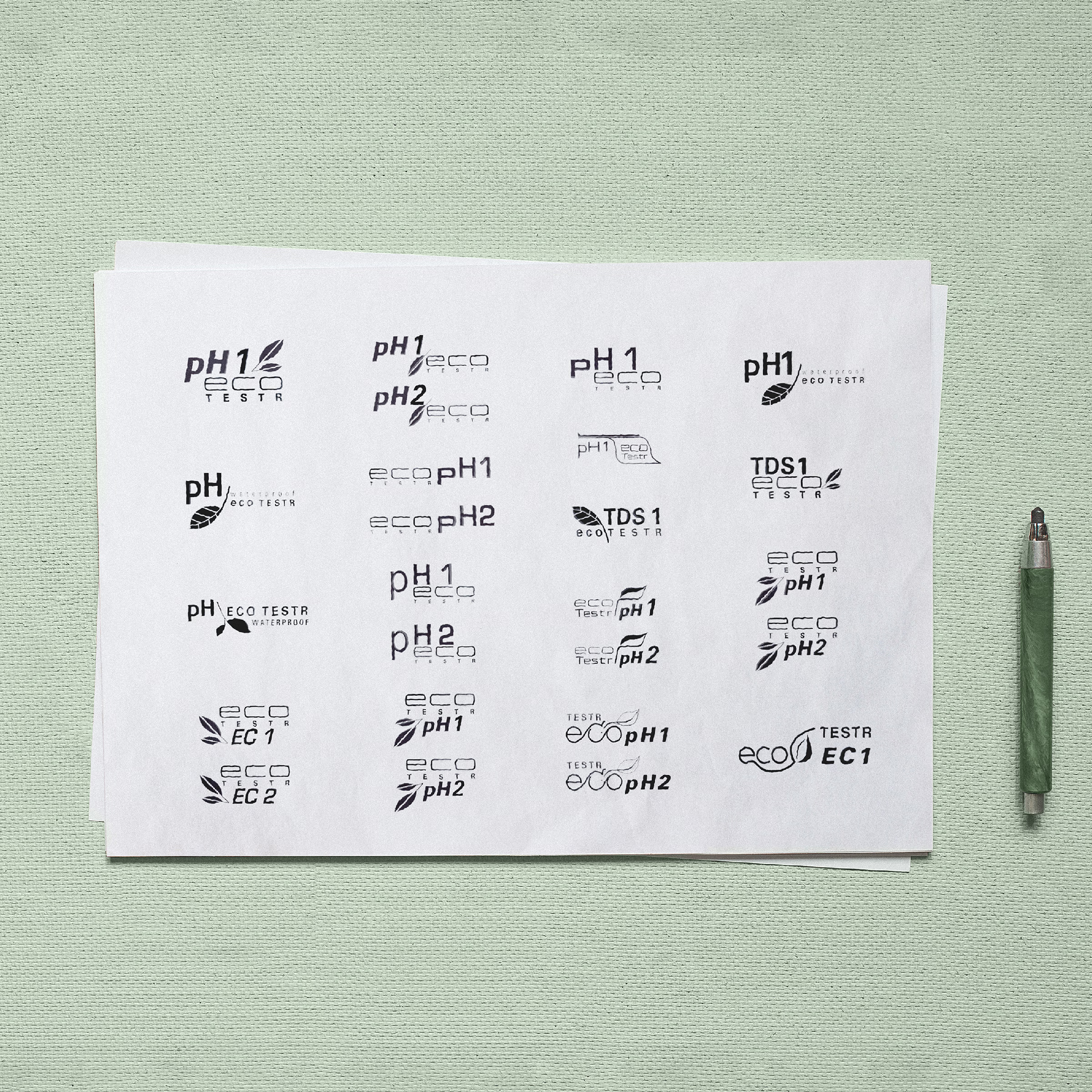
ECO started as shorthand for economy. The development work opened another frame: usability, waterproofing, retrieval, fewer parts, less assembly time, and built to survive fieldwork. Together, those choices moved ECO from economy toward ecology. I pushed the visible system in that direction: away from neutral beige toward green; with supporting graphics, a leaf mark, and product identity that could carry the environmental read.
With that, the EcoTestr moved from a cost label to an environmental signal.
(the proof)
Reception was strong enough that Eutech's Head of Product made the call mid-development: replace the existing product line with this design.
EcoTestr remained Eutech's economy line of waterproof pocket testers. It held in the market through its technology and the use: waterproof, field-ready, retrievable.
EcoTestr held inside the business through the build: one housing, low part count, fast assembly, private-label ready.
The design earned the customer. The manufacturing earned the shelf life.
The architecture scaled across seven Eutech pocket testers and adapted for Cole-Parmer and Thermo Fisher.
One housing.
Seven products.
Three brands.
More than fifteen years in the market.
Thermo Fisher has since introduced updated Pocket Tester variants with a refined body and LCD display.
The core architecture remains recognizable: elongated handheld form, upright display, button zone, removable cap, field-ready use.
EcoTestr became the visible system.
Green colorway.
Leaf motif.
Waterproof body.
Field-ready form.
Underneath it: one-handed use, a sealed body, a workflow proven in the field and the lab, and one housing that carried the product family across three brands without new tooling.
The work became a visual and structural language built to travel beyond a single product.
The brief asked for economy.
The work created leverage.
The products changed.
The architecture held.
(the numbers)
Market durability
Still in market across brands and variants.
Platform leverage
One housing. Seven products. Three brands.
(the evidence)